A land forged
by fire and water
A land forged
by fire and water
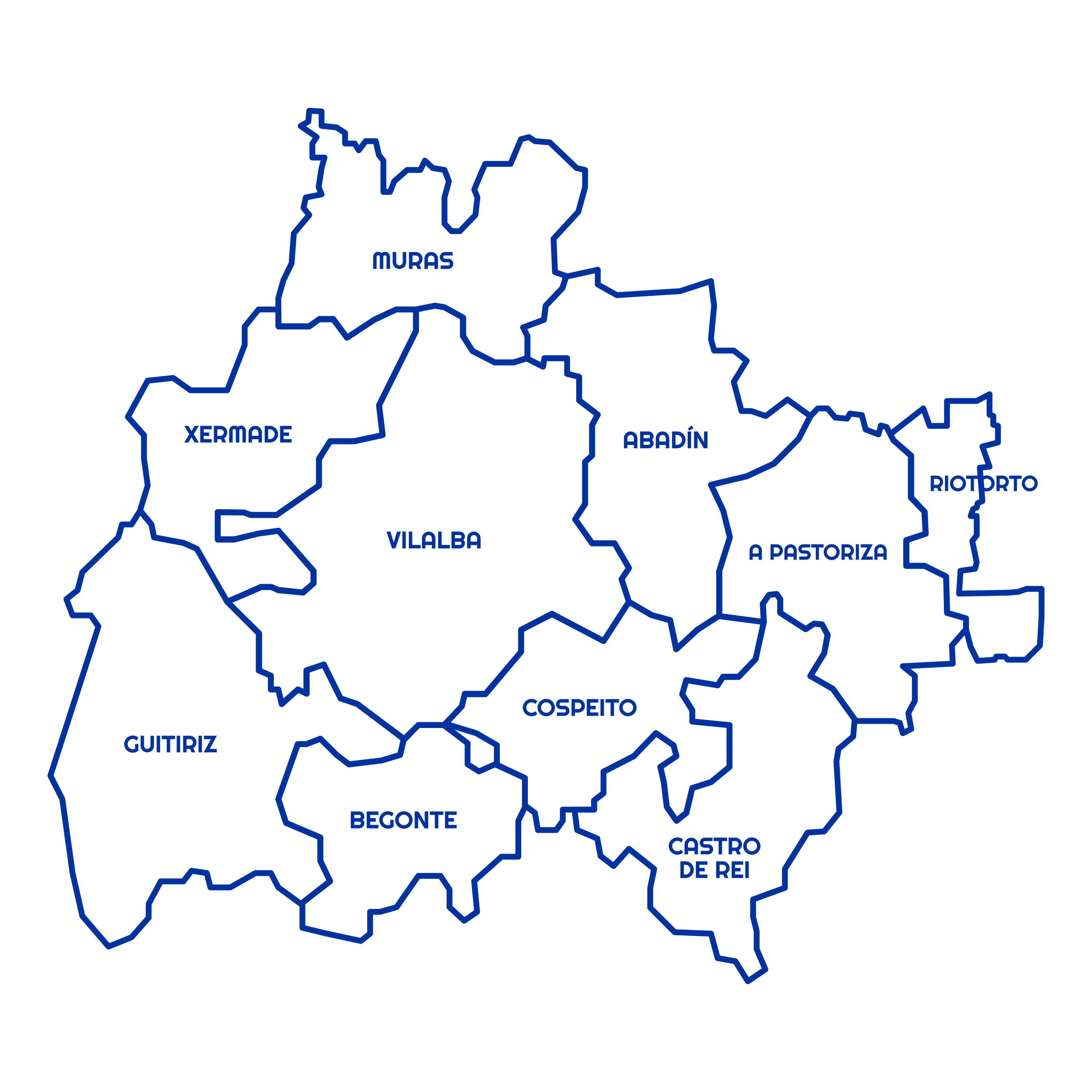
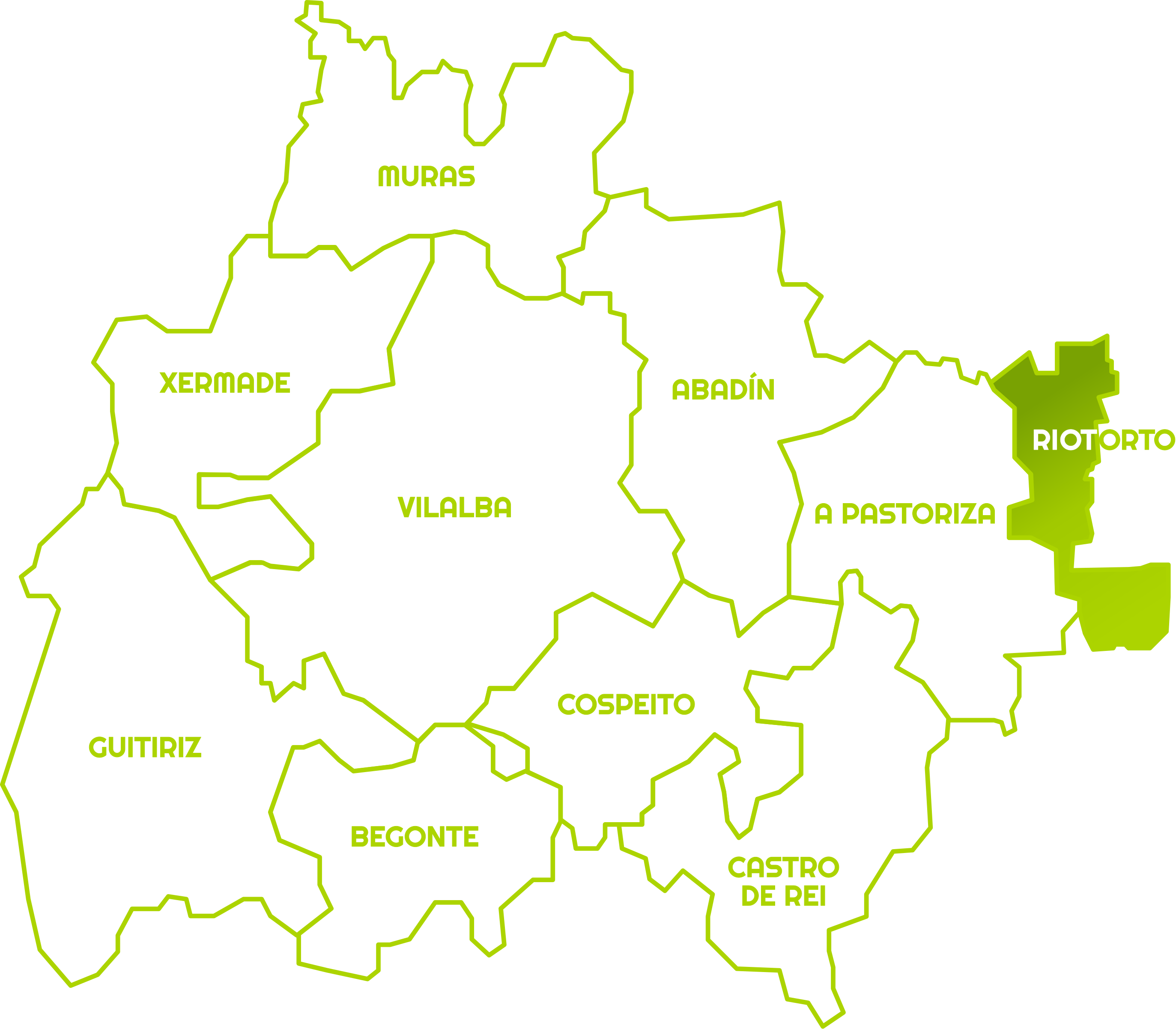
Between A Terra Chá and the Val do Eo, Riotorto unfolds among hills, forests, and small villages that preserve the very essence of rural Galicia. From Pico Carracedo, on the border with Mondoñedo, the landscape descends through valleys and riverbanks toward the capital, As Rodrigas.
Churches, stone houses, and hórreos (traditional granaries) coexist with old mills and workshops where the craft of iron still echoes. In Riotorto, blacksmithing is not just a tradition — it is part of the land’s soul. Nearly twenty artisans keep alive the forges that for centuries shaped tools, history, and character. Nature, craftsmanship, gastronomy, and hospitality intertwine here to offer you a truly unique experience.
Places to see
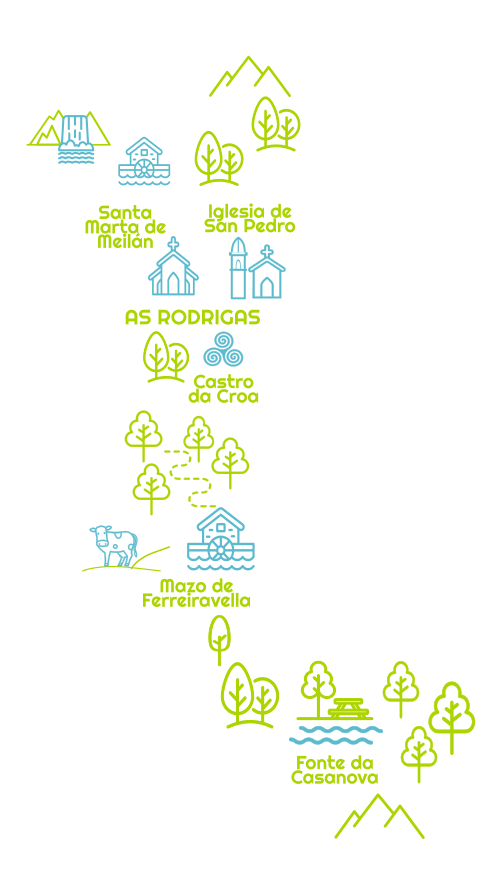
Losing yourself along the paths of Riotorto means entering a landscape where centuries of history are preserved in every corner. Among villages and valleys, you’ll find rural churches, small chapels, mills, and old lime kilns — silent witnesses to a life shaped by craftsmanship and respect for the land. At the heart of the municipality, the Mazo de Ferreiravella stands as a living symbol of that tradition: a unique ethnographic site where water and iron once came together to give life to the ancient forges that made Riotorto famous. But the best discoveries are the ones not found on any map. Stately houses, hórreos, and unique architectural details appear in every parish — from Órrea and Galegos to Santa Marta de Meilán and Ferreiravella — inviting you to pause and enjoy the simple, authentic beauty of the A Terra Chá countryside.
Old Church of
San Pedro
From its elevated position overlooking As Rodrigas, the capital of Riotorto, the Church of San Pedro, built in the 18th century, is one of the municipality’s most emblematic temples. Baroque in style with later Neo-Gothic additions, it stands out for its independent bell tower and the careful restoration that brought it back to life after more than six decades in ruins. Inside, its rectangular floor plan preserves Baroque altarpieces within an atmosphere that reflects the historical and spiritual significance of this remarkable church.
Castro da Croa
Set on a hilltop with views over As Rodrigas and now adapted as an open-air leisure space, it is one of Riotorto’s most remarkable archaeological sites. It preserves traces of ancient walls and defensive terraces, and excavations have uncovered pottery fragments, metal pieces, and a valuable gold torque — now kept in the Provincial Museum of Lugo. A testament to the area’s Celtic past and its ancestral bond with iron, it remains a true emblem of the local historical heritage.
Torre do Moro
The Torre do Moro, dating from between the 14th and 15th centuries, rises in Santa Marta de Meilán, a parish linked since the 6th century to the ancient see of Britonia. Rectangular in plan and featuring a pointed-arch entrance, it preserves part of its original structure and an interesting tympanum. Surrounded by legends of hidden treasures and the spirit of its former lord, the tower stands as one of the most distinctive medieval vestiges of Riotorto’s heritage.
Anciet lime kilns
In Riotorto, remains of old lime kilns — stone ovens once used to produce lime from limestone — are still preserved. Notable examples include those of Machín and the ones near Santa Marta de Meilán.
Traditional hórreos
Riotorto boasts a remarkable heritage of traditional hórreos with outstanding Asturian-style examples found in the parishes of Órrea and Galegos. These elevated wooden or stone structures, built to keep grain dry and safe from rodents, are iconic elements of rural architecture in northwestern Spain.
Ethnographic
Site of Mazo de
Ferreiravella
The Mazo de Ferreiravella is the heart of Riotorto’s blacksmithing heritage. In this corner where water drives iron, one of the finest examples of a traditional hydraulic forge in Galicia has been preserved. Restored and surrounded by a beautiful natural setting, the site shows how the river’s power was transformed into energy to forge tools and sustain the craft that shaped the municipality’s history. Today, the sound of water and the whisper of the forest accompany you in a place where nature, tradition, and living memory come together.
Land of rivers
and forests
Part of the Terras do Miño Biosphere Reserve, Riotorto is a landscape shaped by gentle slopes that descend into peaceful valleys, crossed by rivers and streams winding through native forests and green meadows. Here, nature keeps its own rhythm: the murmur of water, the shade of oak trees, and the clean air that envelops each village draw a landscape that invites calm. Among these settings runs the Ruta do Ferro, a hiking trail that follows old paths and river landscapes of great beauty, where nature and heritage meet in the form of forges, mills, and workshops that recall the municipality’s blacksmithing past. Riotorto is a place to walk slowly, breathe nature, and discover the harmony between the landscape and rural life.
Culture, taste & celebration
Riotorto preserves a rich cultural heritage reflected in its traditions, the hospitality of its people, and the authenticity of its gastronomy. Throughout the year, the calendar fills with parish festivals celebrated across the municipality. The Seasonal Markets, held on the second Sunday of each season — in February, May, August, and November — offer a wide variety of local organic products, bringing life and a festive atmosphere to the town centre. And of course, every April you can’t miss the Feira de Artesanía do Ferro (Iron Craft Fair), an annual event that pays tribute to the trade that defines Riotorto’s identity.
In addition, if you enjoy traditional games, the bowling field of Santa Marta de Meilán hosts the Galician Triples Championship – Bolo en Liña every year, organised by the Cruceiro de Meilán Club in collaboration with the Galician Bowling Federation, keeping alive one of Riotorto’s most authentic and singular traditions.
Culture, taste & celebration
Riotorto preserves a rich cultural heritage reflected in its traditions, the hospitality of its people, and the authenticity of its gastronomy. Throughout the year, the calendar fills with parish festivals celebrated across the municipality. The Seasonal Markets, held on the second Sunday of each season — in February, May, August, and November — offer a wide variety of local organic products, bringing life and a festive atmosphere to the town centre. And of course, every April you can’t miss the Feira de Artesanía do Ferro (Iron Craft Fair), an annual event that pays tribute to the trade that defines Riotorto’s identity.
In addition, if you enjoy traditional games, the bowling field of Santa Marta de Meilán hosts the Galician Triples Championship – Bolo en Liña every year, organised by the Cruceiro de Meilán Club in collaboration with the Galician Bowling Federation, keeping alive one of Riotorto’s most authentic and singular traditions.
Riotorto’s gastronomy combines local produce and traditional recipes: artisanal cured meats, wood-fired bread and empanadas, locally produced honey, and a popular pastry tradition highlighted by the Tarta de Riotorto, a delicious almond-based cake. In its bars and restaurants, you can savour the authentic spirit of its cuisine — simple, flavourful, and made with excellent local meats and garden produce.
Tarta de Riotorto
Honey
Clouds: {{current_weather.clouds}}%
Wind ({{current_weather.wind.deg}}): {{current_weather.wind.speed}}{{units_wind}}
Come and discover Riotorto
Clouds: {{current_weather.clouds}}%
Wind ({{current_weather.wind.deg}}): {{current_weather.wind.speed}}{{units_wind}}
Come and discover Riotorto